Lunar Eclipse Today – Near-Total Eclipse to Light Up South Florida Skies
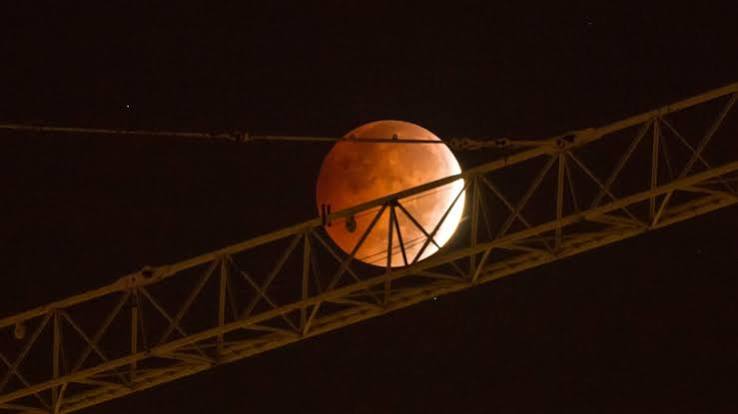
South Florida residents who step outside Thursday night will have an opportunity to witness a rare and striking celestial event as a near-total lunar eclipse moves across the night sky.
The eclipse will be visible throughout South Florida, giving residents across the region a chance to watch the Moon pass through Earth’s shadow without the need for special protective glasses.
A lunar eclipse happens when the Earth moves between the Sun and Moon, causing Earth’s shadow to fall across the surface of the Moon. The alignment of the three celestial bodies creates the conditions needed for the eclipse.
Unlike a solar eclipse, a lunar eclipse can be viewed safely with the naked eye.
When will the lunar eclipse happen?
The eclipse will develop gradually over several hours Thursday night and into the early hours of Friday.
9:23 p.m. — Eclipse begins:
The Moon will begin moving into the outer portion of Earth’s shadow. The initial change will be subtle and may be difficult to see. From Miami, the Moon will appear low toward the east-southeast.
10:33 p.m. — Partial eclipse begins:
Earth’s darker inner shadow, known as the umbra, will begin visibly covering part of the Moon. At this point, the eclipse should become much easier to observe.
12:12 a.m. — Peak of the eclipse:
The eclipse will reach its most dramatic point shortly after midnight. The Moon will be deeply immersed in Earth’s shadow and could develop noticeable reddish, copper or orange coloring. From Miami, viewers should look toward the south-southeast.
1:51 a.m. — Partial eclipse ends:
The Moon will complete its passage out of Earth’s umbra, bringing the most prominent phase of the eclipse to an end.
Best places to watch the lunar eclipse
Residents do not necessarily need to travel far from the city to see the event. At its peak, the Moon will be approximately 51 degrees above the horizon toward the south-southeast, giving viewers in the Miami metropolitan area a favorable position for observing the eclipse.
However, moving away from areas with heavy artificial lighting can make the experience better, particularly when trying to see the Moon’s changing color and other details in the night sky.
Astrophysicist Dr. Emily Rice of the City University of New York described the expected view as especially impressive, noting that much of the Moon could take on a reddish appearance.
The reddish coloration occurs as sunlight passes through Earth’s atmosphere and reaches the Moon during the eclipse, creating the dramatic appearance sometimes associated with a “blood moon.”
When is the next total lunar eclipse?
Although lunar eclipses happen periodically, skywatchers in the region will have to wait several years for another total lunar eclipse that is visible from South Florida.
The next total lunar eclipse visible from the region is expected in June 2029.
For South Florida residents, Thursday night’s event offers a rare opportunity to step outside, look toward the Moon and watch Earth’s shadow gradually transform the lunar surface.